Article Highlights: Choosing the Right Business Entity General Overview of Common Business Structures Sole Proprietorships
- We are here to help you every step of the way
- info@snbmanagement.group

About Us
Efficient strategies for optimizing operational workflows are essential for business growth. Our team focuses on providing tailored solutions to enhance productivity and drive innovation.
Contact Us Contact UsContact Us
-
Valentin resides at 24 Street Road in New York
- +18 123 4567
- hello@bentol.com
- We are here to help you every step of the way
- info@snbmanagement.group
About Us
Efficient strategies for optimizing operational workflows are essential for business growth. Our team focuses on providing tailored solutions to enhance productivity and drive innovation.
Contact Us Contact UsContact Us
-
Valentin resides at 24 Street Road in New York
- +18 123 4567
- hello@bentol.com
- We are here to help you every step of the way
- info@snbmanagement.group
About Us
Efficient strategies for optimizing operational workflows are essential for business growth. Our team focuses on providing tailored solutions to enhance productivity and drive innovation.
Contact Us Contact UsContact Us
-
Valentin resides at 24 Street Road in New York
- +18 123 4567
- hello@bentol.com
How to Choose the Perfect Business Entity for Your Venture
- Home
- How to Choose the Perfect Business Entity for Your Venture

Uncategorized
 By admin
November 26, 2024
By admin
November 26, 2024
How to Choose the Perfect Business Entity for Your Venture
By admin
November 26, 2024
Article Highlights:
- Choosing the Right Business Entity
- General Overview of Common Business Structures
- Sole Proprietorships
- Partnerships
- Limited Liability Companies (LLCs)
- C Corporations
- S Corporations
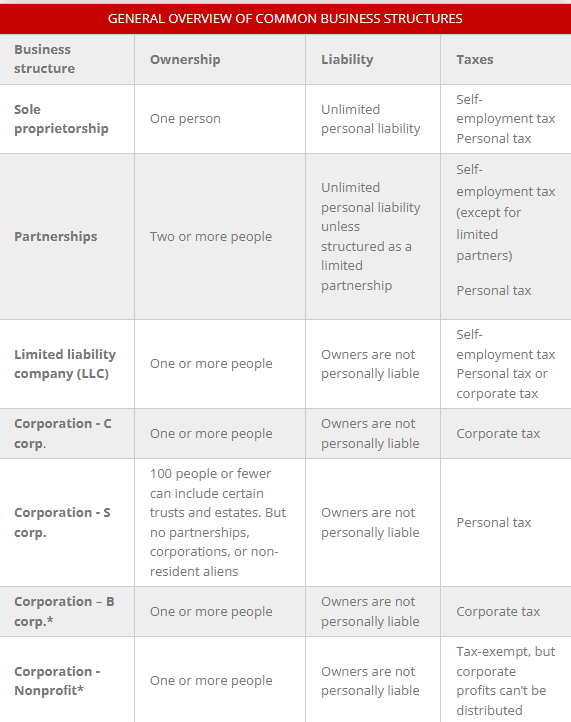
Compare general traits of these business structures, but remember that ownership rules, liability, taxes and filing requirements for each business structure can vary by state. The following material is a general overview of these business structures and it is best practice to consult with your legal counsel and this office before making a final decision.
Sole Proprietorship – A business is automatically considered to be a sole proprietorship if it is not registered as any other kind of business. Thus, the sole proprietor’s business assets and liabilities are not separate from personal assets and liabilities. As a result, sole proprietors can be held personally liable for the debts and obligations of the business. A sole proprietor may also find it difficult to raise money since banks are hesitant to lend to sole proprietorships.
NOTE: If the business owner is the sole member of a domestic limited liability company (LLC) and elects to treat the LLC as a corporation, then it is not a sole proprietorship.
pros
- Simplicity and Cost-Effectiveness: Sole proprietorships are the simplest and least expensive business entities to establish. They require minimal paperwork and are easy to manage.
- Complete Control: A sole proprietor has full control over all business decisions and operations.
- Tax Benefits: Income and expenses are reported on the individual’s personal tax return, simplifying the tax process. The sole proprietor may also qualify for certain tax deductions available to small businesses.
Cons:
- Unlimited Liability: Sole proprietors are personally liable for all business debts and obligations, which means personal assets are at risk if the business incurs debt or is sued.
- Limited Growth Potential: Raising capital can be challenging, as a sole proprietorship cannot sell stock or bring in partners.
- Self-Employment Taxes: Sole proprietors are responsible for paying self-employment taxes, which cover Social Security and Medicare contributions.
- Self-Employment Taxes: Sole proprietors are responsible for paying self-employment taxes, which cover Social Security and Medicare contributions.
Formation and Dissolution:
- Formation: Establishing a sole proprietorship is straightforward, often requiring only a business license or permit.
- Dissolution: Dissolving a sole proprietorship is equally simple, involving the cessation of business activities and settling any outstanding debts.
- Partnership - A partnership is the relationship between two or more people in a trade or business together. Each person contributes money, property, labor or skill, and shares in the profits and losses of the business. Partnerships represent the simplest structure for two or more people to be in business together. Two of the most common types of partnerships include:
- Limited Partnerships (LP): Which have one general partner with unlimited liability. The other partners have limited liability and generally have limited control over the business.
- Partnerships are pass-though entities, meaning the partnership does not pay taxes. Instead, income, losses, credits and other tax issues are passed through to the partners in proportion to their partnership ownership and reported on their individual returns.
- Limited Liability Partnerships (LLP): A limited liability partnership is also a pass-through entity. The only difference is all the partners have limited liability from debts of the partnership, and the actions of other partners.
Pros:
- Shared Responsibility: Partnerships allow for shared management and financial responsibility, which can ease the burden on individual partners.
- Flexibility: Partnerships can be structured to suit the needs of the partners, with varying levels of involvement and profit-sharing.
- Tax Advantages: Partnerships are pass-through entities, meaning profits and losses are reported on the partners' personal tax returns, avoiding double taxation.
Cons:
- Joint Liability: In a general partnership, each partner is personally liable for the debts and obligations of the business, including those incurred by other partners.
- Self-Employment Taxes: Partners who aren’t limited partners must pay self-employment taxes on their share of the profits.
- Tax Advantages: Partnerships are pass-through entities, meaning profits and losses are reported on the partners' personal tax returns, avoiding double taxation.
3 Comments
Leave a Reply Cancel reply
You must be logged in to post a comment.
Interactively formulate client-focused communities through functional portals. Dynamically supply backward-compatible potentialities
Quickly recaptiualize technically sound value and error-free communities. Proactively transition 2.0 catalysts for change and pandemic leadership skills.
Thanks a lot for your informative comments.